


Haven’t subscribed yet? Join a growing community of people curious about the business behind sport. Every edition breaks down the stories, trends, deals and ideas shaping the global sports industry without the corporate jargon.
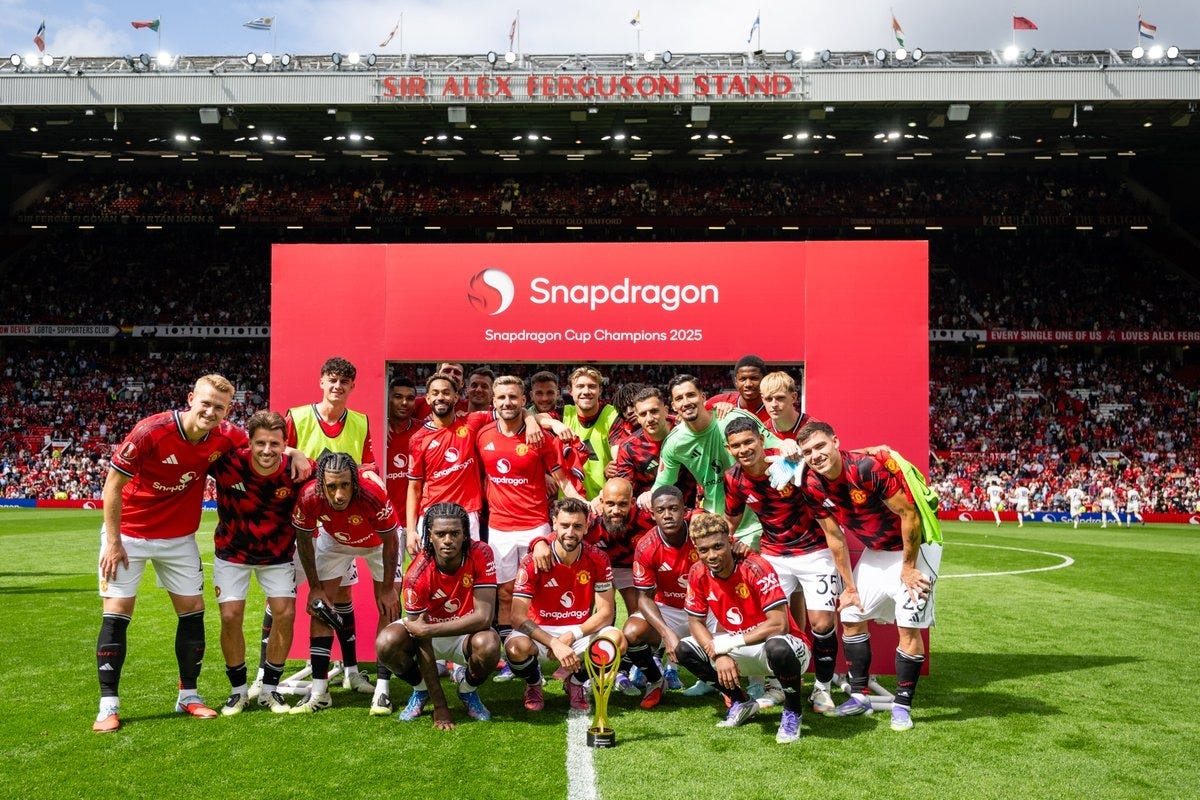
There is a moment in Don McGuire’s account of how Snapdragon ended up on the front of Manchester United’s shirt that tells you everything about how the best sports sponsorships actually work.
Manchester United approached him with the opportunity. His immediate reaction, as the CMO of Qualcomm, was “there is no effing way I am going to be able to get this over the finish line.” He estimated a 5% chance of closing it internally. And then he spent a year making the case to his C-suite, not on the basis of brand feel or cultural aspiration, but on equivalent media value. Being the front-of-shirt partner with Manchester United and having 24 home men’s matches a year alone is like getting the equivalent of 24 Super Bowl advertisements. That is the arithmetic he walked into the boardroom with.
He closed the deal. And what happened next is why this story is worth telling in full.
The Entry Point and How They Got In
Qualcomm first tested sports sponsorship in Formula 1 with Ferrari in 2022. The brand had an existing business relationship with Ferrari outside of motorsport, so the entry felt natural. Red brand, red car, clean alignment story.
It lasted one season. At the Abu Dhabi Grand Prix, Qualcomm’s Ferrari paddock passes fell through. Mercedes offered access to their paddock instead. That hospitality moment sealed a relationship that has since grown into one of the more significant B2B technology presences in F1. Qualcomm expanded its Mercedes partnership to include driver Doriane Pin and F1 Academy, the women’s single-seater championship, and the brand now shows up on the cars, the race suits, the team clothing, the digital channels, and through driver partnerships and on-site activation at race weekends.
From Ferrari to Mercedes in the same season. In hindsight, it looks prescient. Lewis Hamilton announced his move from Mercedes to Ferrari shortly afterwards.
The Manchester United conversation started around the same time and ended up being the bigger story. The front-of-shirt deal, when it finally closed, delivered more than 5 billion impressions in the first season alone. Hundreds of thousands of new additions to Qualcomm’s Snapdragon Insiders membership community. McGuire has described it as “pretty life-changing for the brand.”
The Launch That Set the Tone
How a brand introduces itself to a football club’s fanbase matters more than most partnership teams understand. Get it wrong and the announcement becomes a corporate formality. Get it right and it becomes content that the fan community adopts as its own.
Snapdragon got it right.
The launch campaign featured Eric Cantona and Sir Alex Ferguson. Not as celebrities hired to look good in a film. As genuine cultural figures from Manchester United’s history, used in a way that demonstrated the brand had done its homework. The “Country Roads” song integration, the local references, the tone that sat inside Old Trafford culture rather than beside it. McGuire described it as requiring deep research into the club’s history and a willingness to take feedback from people who understood that culture better than any marketing team ever could.
This is the thing that separates authentic sports brand integration from logo placement with a press release. Qualcomm was not announcing itself to Manchester United fans. It was trying to earn its place in their conversation. And the way it chose to do that, through the people and the music and the references that fans already cared about, is what made the launch land rather than slide off.
The Instagram and social media strategy that followed built on that foundation. Viral content from shirt reveals, fan reaction videos, behind-the-scenes access that felt genuinely inside the club rather than constructed around it. The jersey launch moments that travelled organically across platforms. None of this happens accidentally. It happens when the brand has done the work to understand what the community actually cares about and creates content that fits within that world.
The Third Kit Moment and What It Tells You About Brand Confidence
This season Manchester United released a cream third kit and something interesting happened with the Snapdragon logo.
Rather than the full brand lockup that appears on the red home shirt, the cream kit features just the Snapdragon icon. No wordmark. A much smaller visual footprint on one of the most valuable pieces of advertising real estate in global sport.
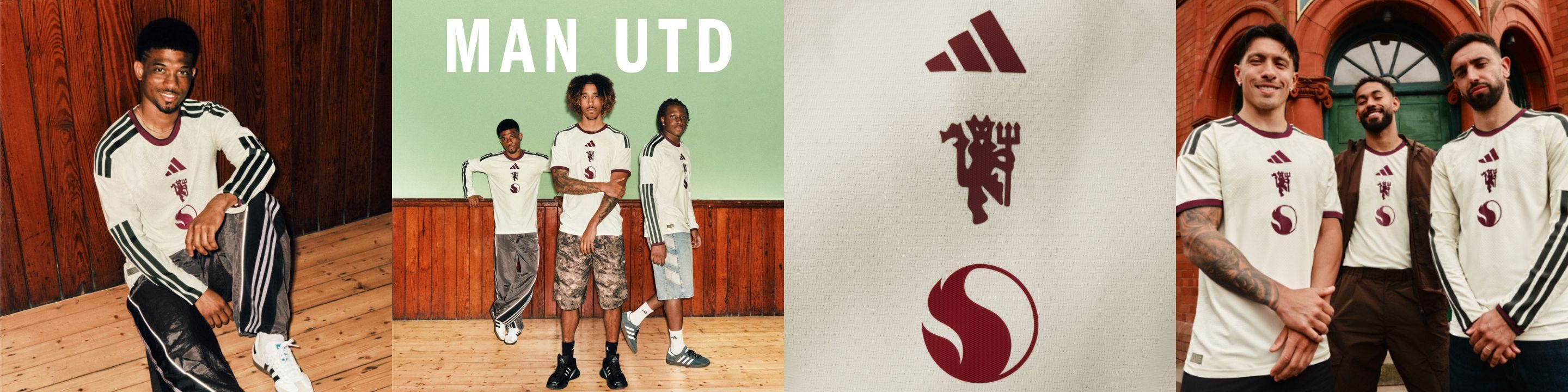
Don McGuire explained the thinking in a recent newsletter and it is worth reading carefully. The fanbase awareness of Snapdragon now sits at 87% among Manchester United supporters. 68% of fans understand the role Snapdragon plays in the technology experiences they rely on daily. More than half say they would prefer a Snapdragon-powered device for their next purchase.
“The data told us we didn’t need to fight for more space,” McGuire wrote. “It told us we had earned the freedom to use it differently.”
That is a genuinely sophisticated commercial statement. A brand with lower awareness would demand maximum logo prominence on every piece of kit inventory because visibility is still the priority. Snapdragon has moved past that stage. The awareness is built. The recognition is there. Now the priority is serving the community rather than shouting at it.
Compare this to the more common scenario where brand and club are in tension over colour guidelines and logo placement. The West Ham and QuickBooks situation from last season is a clean example. QuickBooks’ brand green sat uncomfortably on a kit that was black and gold. The brand’s commercial need for consistency collided with the club’s design ambitions. The result pleased neither side fully.
Snapdragon on the cream kit tells a different story. The brand has integrated into the aesthetic rather than fighting it. That is only possible when the awareness foundation has already been built and both sides have developed the trust to let the partnership breathe.
The Social Impact Layer Nobody Talks About Enough
In May 2025, the (RED) logo appeared on the front of Manchester United’s red shirt for two fixtures. The women’s match against Arsenal on May 10th and the men’s match against West Ham on May 11th. This was made possible by Snapdragon’s front-of-shirt sponsorship and represents something genuinely unusual in sports marketing.
Qualcomm has spent over two decades working on health technology infrastructure in sub-Saharan Africa. Programmes supporting HIV education and care for children in South Africa. Vaccine delivery systems. Mobile healthcare tools for maternal health. This is not a new commitment dressed up as corporate social responsibility for a sponsorship announcement. It is a documented history of work that pre-dates the Manchester United partnership.
The (RED) collaboration used the most visible platform in English football, the front of Manchester United’s shirt in a live Premier League broadcast, to shine attention on causes that have nothing to do with selling processors. And it worked precisely because the brand’s credibility on those issues was already real.
McGuire described impact in a podcast interview as creating “an exponential movement or feeling that moves the world in a positive direction.” That framing sounds abstract until you see it applied concretely. Two matches. The (RED) logo on the shirt. Global broadcast reach directed at health equity issues in Africa. A commercial sponsorship used as a vehicle for genuine social attention.
That is what partnership at its best can do that advertising alone never can.
What This Delivers for a B2B Brand
The LinkedIn comments under McGuire’s recent piece about the cream kit generated an interesting debate. One commenter argued that sponsorship has always been about visibility and engagement and that the industry simply needs better education on the distinction. McGuire pushed back directly: teams and leagues value their commercial assets based on equivalent media value, which means the fee structure is predominantly built on AVE and broadcast value. Leaving brands to treat activation as an additional budget item on top of their rights fee.
The counterargument from others in the thread is the more useful one. The strongest partnerships do not ask “how much exposure did we get?” as their primary metric. They ask “what did we give back to the people who made the partnership possible?”
Snapdragon has generated demonstrable B2B value from its sports portfolio in ways that go well beyond impression counts. At Mercedes in Formula 1, the hospitality and networking access has enabled Qualcomm to meet and build relationships with commercial partners including WhatsApp and Marriott in environments where those conversations happen naturally rather than through formal business development processes. Sports hospitality as enterprise sales infrastructure is one of the most consistently underappreciated aspects of how large B2B companies extract commercial value from their partnership investments.
The Snapdragon Insiders community, which has grown significantly through both the Manchester United and F1 partnerships, represents a direct consumer engagement database for a brand that historically had almost no consumer-facing presence. Qualcomm makes chips. They sit inside devices. Most consumers have never thought about who makes them. Building a community of people who not only recognise the Snapdragon name but actively identify with it and express preference for it in purchasing decisions is a transformation in brand equity that no conventional B2B marketing channel could have achieved at comparable cost.
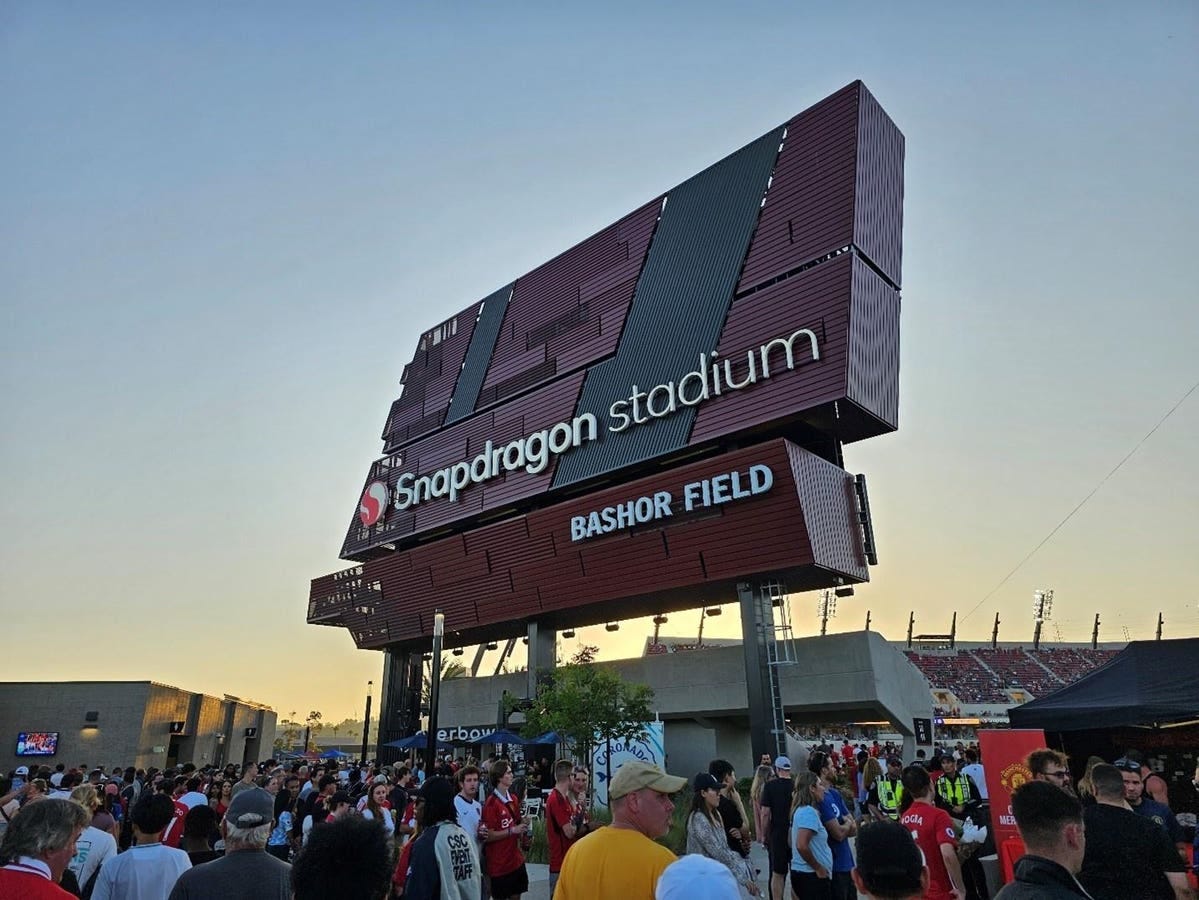
The Snapdragon Stadium naming rights deal in San Diego, a 15-year agreement that now hosts San Diego FC in MLS and San Diego Wave FC in NWSL alongside its original college football purpose, represents the local dimension of the same strategy. Lower-level KPIs, community connection, earned media through international broadcasts when the stadium hosts events like the Concacaf Gold Cup. The brand earns broadcast exposure in markets it did not deliberately target simply by having its name on a venue that hosts events with international distribution.
The Music Integration and Cultural Breadth
One of the more interesting threads from McGuire’s podcast appearances is the role of music in Snapdragon’s Manchester United partnership strategy.
The collaboration with artist Kaleo produced content that connected Manchester United’s fanbase through music rather than through football. This is not decoration. It is a recognition that in 2026, 62% of fans discover new teams or players through short-form video rather than traditional broadcasting, and that the communities gathering around music and sport increasingly overlap.
McGuire described halftime shows as “live music videos with high production value and engagement for fans” and framed the music partnership dimension as finding the shared emotional territory where the brand can contribute something that feels genuinely additive to the fan experience rather than interrupting it.
The scale of this is visible in global music data. The recording industry has grown from $14 billion in 2014 to nearly $30 billion today, with 70% of revenue coming from streaming. The audiences consuming that music are the same audiences watching Premier League football and following Formula 1. Brands that find authentic ways to show up at that intersection, as Snapdragon has done through the Kaleo collaboration and through aligning with cultural moments in both industries, are building reach into communities that conventional sports media alone cannot access.
What Other B2B Brands Should Take From This
The simple version of the Snapdragon lesson is: stop treating front-of-shirt as the destination and start treating it as the starting point.
The logo on the shirt is the ticket to entry. What you do once you are inside the community is what determines whether the investment was worth it. Qualcomm arrived at Manchester United with the Cantona and Ferguson launch, earned trust through cultural sensitivity and genuine research, built awareness systematically through social and digital content, diversified into social impact through (RED), integrated into local community through the San Diego stadium, and used F1 hospitality as a genuine enterprise networking infrastructure.
The 87% awareness figure among Manchester United fans is not a vanity metric. It is the proof of concept for a strategy that started with a CMO who thought he had a 5% chance of closing the deal and ended up describing it as life-changing for his brand.
The debate about whether sponsorship is primarily about visibility or primarily about engagement is, in Snapdragon’s case, already settled. They built the visibility first. Now they are doing the engagement. And the data is telling them they have earned the freedom to use their platform differently.
That is the only order in which this works. You cannot skip the visibility phase and jump straight to community. But you also cannot stop at visibility and call it a partnership.
Snapdragon has figured out the difference. The cream kit with the icon instead of the wordmark is the most visible proof of it.
Today’s recommended podcast…
If you read my recent newsletter where I took a bit of a dig at The Hundred, you might find this one interesting. The Hundred’s biggest season of change yet, from new owners, kits and sponsors to how the tournament actually performed. Managing Director Vik Banerjee addresses some of the biggest criticisms around The Hundred, how the ECB views its progress internally, and what the next phase of the competition could look like.
Brilliant read!